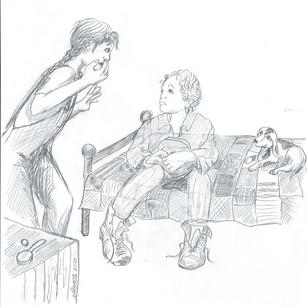
I decided to give away two books instead of one. So here are the winners.
Katrina Angele and EG Kaufman.
Thank you for participating. You both win a signed copy of The Legend of Ghost Dog Island, along with a grab bag of kiddie goodies.
Hope you enjoy!!!!
Rita
Tales from the Bayou
Monday, May 20, 2013
Sunday, May 12, 2013
Children's Book Week - Giveaway Hop
Hello Hoppers! I am giving away a signed copy of my middle grade book, The Legend of Ghost Dog Island, along with a grab bag of kiddie items.
Mama closed the door behind her. She knew once Papa got
going on one of his tales, there was no stopping him.
The last traces of daylight seemed to disappear in a hurry,
as if Papa had ordered it away. The glass globe of the kerosene lamp clinked.
He touched a match to the wick and adjusted the flame until it filled the room
with pale light and gray shadows. He motioned me to sit next to him on the worn
sofa.
I hurried to his side, not knowing what spooky legend he was
going to tell this time. But as scared as I’d get, I always enjoyed hearing
’em.
“Mais, there’s a legend told around these parts.” That
was how they always started out. He leaned down so the light from the lamp made
eerie shadows across his face.
I rolled my eyes, determined not to get spooked this time.
“Folks say there’s something living out yonder,” he went on.
“Legend has it the monster lures dogs to the island using evil spells. Then at
the peak of the full moon, they’re turned into hollow spirits with glowing
eyes.” Papa put on his eeriest sneer. “That there’s Ghost Dog Island.”
“Ghost dogs?” I pulled my knees up against my chest and
wrapped my arms around ’em tight. My mind conjured up images of a huge monster
with drippy fangs and dogs with bright yellow eyes. I thought about the feeling
I had of something watching us. Was there really a creature out there? Did it
have its eye on my best buddy? I shuddered.
IEEEOWWWOOOO-oooooooo! The howling sound echoed again
across the bayou.
What about a short book trailer?
Now here's how to win!!!
a Rafflecopter giveaway
Wednesday, May 8, 2013
Louisiana Bayous
| Photo by George Monette |
Today, I was going to write a post about Louisiana bayous, since it is the main theme for my blog and for my book, The Legend of Ghost Dog Island. I found instead this wonderful article in USA Today and decided to share it.
Facts about Louisiana Bayous
By Lee Morgan, Demand Media (from USA Today Travel Tips http://traveltips.usatoday.com/louisiana-bayous-59733.html)
Located primarily in the southern reaches of Louisiana,
the bayou is a defining feature of this unique part of America. The bayou is
home to many people living in the Pelican State as well as to an abundance of
wildlife. Unlike the rest of Louisiana, bayou life has its own pace and
culture. The swamps and the gators might not be for everyone, but the people of
the bayou feel right at home. This often-misunderstood area remains a mystery
to many Americans.
![]() |
| Photo by George Monette |
The Bayou Name
The name "bayou" is even native to Louisiana.
According to the Famous Wonders website, the term "bayou" is believed
to have originated from "bayuk," a word meaning "small
stream" in a local Native American tongue. The word was first used in
Louisiana and has come to mean the braided streams that are fed by the
Mississippi River in the low-lying areas of Southern Louisiana. These marshes
or wetland areas move very slowly and make ideal homes for creatures like
alligators, crawfish and catfish -- all of which are popular bayou foods.
Bayou Culture
The bayou culture is actually more diverse than many may
think. There is no doubt that the most closely associated culture to the bayou
is the Cajun culture. The Cajuns were French-speaking settlers relocated from
Nova Scotia. They were actually known as "Acadians," but the local
dialect eventually led to the word becoming "Cajun." In South
Louisiana's bayous the culture is as diverse as the ingredients found in the
local gumbo. In addition to the French Canadians that were the foundation of
much of the bayou culture, there are also significant influences from Spanish,
German, African and Irish settlers as well as Native Americans. In modern Cajun
culture on the bayou, the people are a blend of all these cultures. In the
Southern Louisiana bayous today, you can often find people who consider
themselves "Cajuns" who primarily speak French, but have last names
like Smith, McGee or Manuel as well as the French surnames common in the
region.
| Photo by George Monette |
Disappearing Bayous
The bayous are disappearing. Since the 1930s, the coast
of Louisiana has lost 1,900 square miles of marshes and coastal wetlands. This
is an area the size of Delaware that has been swallowed up by the Gulf of
Mexico. Despite recent efforts to reduce the erosion of the bayou, Louisiana
still loses about an acre of land every 33 minutes. That results in a loss of
25 square miles per year. Levees have funneled marsh-building sediment into the
ocean; engineers have cut 8,000 miles of canals through the bayous to help the
petroleum industry, all of which contribute to the faster erosion of the
bayous.
Bayou As Protector
Many people do not understand the importance of the
bayou, not only as a natural habitat for many species of animals, but also as a
protector of inland areas. Cities like New Orleans are under an increasing
threat from hurricanes as a result of coastal erosion. When the bayous shrink,
it means the storm surge from tropical storms and hurricanes can reach further
inland. These storm surges can result in greater flooding. An example of this
effect was apparent when the levees were overrun by Hurricane Katrina's storm
surge in 2005.
About the Author
Lee Morgan is a fiction writer and journalist. His writing has appeared for more than 15 years in many news publications including the "Tennesseean," the "Tampa Tribune," "West Hawaii Today," the "Honolulu Star Bulletin" and the "Dickson Herald," where he was sports editor. He holds a Bachelor of Science in mass communications from Middle Tennessee State University.
Labels:
Lee Morgan,
Louisiana Bayous
| Reactions: |
Sunday, May 5, 2013
Dinner on the Bayou with guest, Linda Benson
Today, I'm cooking up some Cajun chicken and sausage gumbo with my guest author, Linda Benson.
Welcome to the Bayou, Linda. We'll be serving up dinner in a little while, but first, tell us a little about how important setting is in your writing.

Just as setting plays a big part in your book, The Legend of Ghost Dog
Island, many of my books have been inspired by setting, also. I am a country
girl, surrounded by forest and farm land, and because this is such a large part
of who I am, elements of nature and the land sneak into to everything that I
write.
Your wonderful book, Six Degrees of Lost, is on sale right now for an amazing price. Tell us something about it.
A Lost Dog, A First Love, A Journey
Six Degrees of Lost,
set in the Pacific Northwest where I live, tells the story of two teenagers who
are both looking for their place in life. If you love animals, plots with
twists and turns, and stories told in two voices, you’ll enjoy this
richly-layered novel, available as an E-Book. Get it now until May 15...for only 99 cents at AMAZON.
Thirteen-year-old Olive,
with nowhere else to go, is uprooted from sunny California and dumped in rainy
Washington State like a stray. That's exactly what she feels like surrounded by
her aunt’s collection of homeless dogs, cats, and horses.
Fourteen-year-old David’s future is already carved in stone. From a military family with two brothers serving overseas, he’s been pointed towards the Air Force Academy his entire life - but a rafting trip gone awry might ruin his chances.
When a runaway dog is
almost hit by a car, the search for its owner leads Olive and David, two teens
from entirely different backgrounds, to an unlikely bond. Will their growing
attraction to each other be enough to keep Olive from a foolhardy journey to
find her mother? Will David risk his family’s plans to save her?
Here’s a short excerpt:
“So
what’s with all those dogs barking in the back yard?”“They’re foster dogs. My aunt takes them in when they get too crowded at the animal shelter. Some of them aren’t adoptable, and would be put to sleep otherwise.”
“Really?”
I gulp.
“We’ve
also got six cats in the house, plus the horses out back. Come on, I’ll show
you.” The yellow dog jumps up and down, begging for the stick. Olive flings it
down the driveway. I see a small shelter out back, with sagging fences. Olive
is already headed that way, taking short barefoot steps on the gravel, so I
follow.
A
sway-backed pinto horse, with a mouth full of hay, sticks his head out from the
shelter and then turns and goes back to his breakfast. It looks kind of bony.
“Wow,” I say. “Skinny.”
“Yeah,
that’s Paintball.” She grins. “Well, that’s what I call him. He was found
wandering loose up in the National Forest. Aunt Trudy says somebody just dumped
him there.”
“Why
would anybody do that?”
Olive
shrugs. “I know. Hard to believe, huh? I guess they couldn’t afford to feed
him, but still, that’s just mean.”
A
huge brown horse wanders over to the fence. “Who’s this one?” I reach between
the strands of wire and pat his head. He’s just as skinny as the first one.
“My
aunt says he’s ancient, and we’ll probably never get his weight back on. They
found him tied to a tree in front of the animal shelter, but they don’t really
have any facilities for horses there, so he came here instead. He’s sweet,
huh?”
“Yeah,
he seems nice.” The old horse pushes his head underneath my hand, clearly
enjoying the attention.
“I
call him Shakespeare. ‘Cause he looks so noble and elegant.”
Elegant?
I think. That’s a stretch. “Can you ride them?”
“I
don’t know. Aunt Trudy says we don’t really know that much about them. Anyway,
it’s been too hot, and she’s always busy. She’s a clerk at the animal shelter
thrift shop, and she takes turns working down at the shelter, besides feeding
all these animals here at home.”
Olive
talks so fast she makes my head swim. She barely takes a breath, and rattles on.
“So besides the ones she takes in from the shelter, my aunt is always finding
animals, too. She says there must be an invisible sign at the bottom of the
driveway that says: Lost Animals Stop Here.”
“Is
that how you found this dog?” I stroke the big lab’s ears, and he presses
against me.
“He
was standing in the middle of the road,” she says, “and almost got hit by a
car.” She smiles. “Maybe he was reading the sign.”
About the author:

Linda Benson is the author of several middle grade and young adult books, including Walking the Dog, Six Degrees of Lost, The Girl Who Remembered Horses, Finding Chance, and The Horse Jar (which has been translated into Spanish.)
Her passion for nature and animals often finds its way into her writing. She has been a veterinary assistant, zoo keeper, race track groom, realtor, children’s librarian, and owned both a native plant nursery and a saddle shop.
Ms. Benson lives in the Pacific Northwest with her husband and a variety of animals, all of them adopted. When she's not petting a dog, cat, horse, or donkey, traipsing through the woods, or gardening with native plants, she's most likely working on her next book.
Linda, I've read and really enjoyed Six Degrees of Lost, and can't wait to read the others. How can our visitors find more about you?
You can reach me at: http://www.lindabenson.net
Now for dinner!!!
Cajun Chicken and Sausage Gumbo
- Ingredients:
1 1/2 lbs richard's smoked sausage, sliced (or your favorite smoked sausage)
1 cup vegetable oil
1 cup all-purpose flour
1 large onion, chopped
1 bell pepper, chopped
2 stalks celery, chopped
6 garlic cloves, minced
salt and cayenne pepper
green onion, chopped
parsley, chopped
Directions:
1. Brown chicken thighs and sausage in a cast iron dutch oven. Remove from pot and let cool.
2. Add oil to the pot. With wire whisk, blend in flour. Continue stirring constantly, until flour is the color of chocolate syrup. IT IS VERY IMPORTANT TO CONSTANTLY STIR THIS! Once the flour has browned to this point, quickly add onions, bell pepper and celery. Cook until onions are transparent. Add enough water to fill the pot about half way. Simmer.
3. Meanwhile, debone chicken. Add chicken and sausage. If needed, add more water to cover the chicken.
4. Add minced garlic, salt, and cayenne.
5. Let simmer for about an hour.
6. With a large spoon, skim as much fat as possible from the top.
7. Serve in a soup plate, over hot cooked rice.
8. Sprinkle green onions, parsley, and file in the bowls.
| Reactions: |
Wednesday, May 1, 2013
The Nutria
What is a nutria anyway?
Also known as Coypu, the nutria (sometimes called nutria rat) is a rodent. They average ten pounds and look like a cross between a beaver and a rat. They have large rear webbed feet, which makes them good swimmers. They are native to Argentina, but found their way to the states in the 1930s.
They are cute, but I don't think they would make good pets because those large front teeth are three inches long and can penetrate your hand very quickly.
My dad, who was a trapper in the 1940s, said he was trapping for beaver when he caught one of these for the first time. They were rare in Louisiana back then, and their thick hides were worth a "pretty penny." By the 1960's they had become so plentiful in the state, the wetlands began to suffer under their ravenous appetite and wasteful eating habits, along with their high rate of breeding.
Nutria have large incisors that are yellow to orange-red on the outer surface. (Photo from U.S. Geological Survey.)
How did they get so plentiful so fast?
Science Daily says: The biology of the nutria species allows it to reproduce at rapid speed, making it an unwieldy animal to control if released into the wild. A female nutria averages about five young per litter, but can birth as many as 13 at a time. A female can breed again within two days after giving birth, meaning one nutria can have up to three litters per year.
To get a sense of their productivity, 20 nutria brought to Louisiana in the 1930s bred an estimated 20 million animals within two decades, according to a wildlife group in Maryland that tracks nutria data, quoted in a recent report by Louisiana journalist Chris Kirkham.
Although nutria were brought to all parts of the country, said Kirkham's report , warm weather in Louisiana has boosted their numbers. Already under pressure from saltwater intrusion, the marshes also have to deal with the nutria and their voracious appetite for the vital marsh roots that keep wetlands intact.
Did Mr. McIlhenny of Tabasco fame bring them to Louisiana?
For many years, Tabasco sauce magnate E.A. McIlhenny received most of the blame for introducing the rodents from South America to Avery Island in the 1930s. McIlhenny wanted to expand the fur trade in Louisiana at that time, so he brought nutria from South America to his home on Avery Island, the story went. But a hurricane blew down the nutria pen, releasing them into the wild.
The myth held for decades, sometimes perpetuated by family members themselves. Five years ago, a historian hired by the family found records that McIlhenny actually bought the nutria from a St. Bernard Parish fur dealer in 1938. He did eventually set the nutria loose, but not because of hurricane damage, said McIlhenny historian and curator Shane Bernard, quoted in reporter Kirkham's recent newspaper interview.
"I'm confident that all the myth has been stripped away," he said. "Anybody who knows oral history or folklore knows how stories can change when they're passed down from one generation to the next."
(Science Daily)
What do they sound like?
It is said that after Hurricane Audrey, in 1957, during which many young children were swept away into the marshlands, the cries of the nutria were mistaken for lost babies, crying "mom."
In my book, The Legend of Ghost Dog Island, set in Louisiana in the 1950s, there is mention of the eerie sounds these animals make.

What are the Louisiana People doing to save the Marshes from this over-abundant critter?
Check out Nutria Documentary.
Also known as Coypu, the nutria (sometimes called nutria rat) is a rodent. They average ten pounds and look like a cross between a beaver and a rat. They have large rear webbed feet, which makes them good swimmers. They are native to Argentina, but found their way to the states in the 1930s.
They are cute, but I don't think they would make good pets because those large front teeth are three inches long and can penetrate your hand very quickly.
My dad, who was a trapper in the 1940s, said he was trapping for beaver when he caught one of these for the first time. They were rare in Louisiana back then, and their thick hides were worth a "pretty penny." By the 1960's they had become so plentiful in the state, the wetlands began to suffer under their ravenous appetite and wasteful eating habits, along with their high rate of breeding.
Nutria have large incisors that are yellow to orange-red on the outer surface. (Photo from U.S. Geological Survey.)
How did they get so plentiful so fast?
Science Daily says: The biology of the nutria species allows it to reproduce at rapid speed, making it an unwieldy animal to control if released into the wild. A female nutria averages about five young per litter, but can birth as many as 13 at a time. A female can breed again within two days after giving birth, meaning one nutria can have up to three litters per year.
To get a sense of their productivity, 20 nutria brought to Louisiana in the 1930s bred an estimated 20 million animals within two decades, according to a wildlife group in Maryland that tracks nutria data, quoted in a recent report by Louisiana journalist Chris Kirkham.
Although nutria were brought to all parts of the country, said Kirkham's report , warm weather in Louisiana has boosted their numbers. Already under pressure from saltwater intrusion, the marshes also have to deal with the nutria and their voracious appetite for the vital marsh roots that keep wetlands intact.
Did Mr. McIlhenny of Tabasco fame bring them to Louisiana?
For many years, Tabasco sauce magnate E.A. McIlhenny received most of the blame for introducing the rodents from South America to Avery Island in the 1930s. McIlhenny wanted to expand the fur trade in Louisiana at that time, so he brought nutria from South America to his home on Avery Island, the story went. But a hurricane blew down the nutria pen, releasing them into the wild.
The myth held for decades, sometimes perpetuated by family members themselves. Five years ago, a historian hired by the family found records that McIlhenny actually bought the nutria from a St. Bernard Parish fur dealer in 1938. He did eventually set the nutria loose, but not because of hurricane damage, said McIlhenny historian and curator Shane Bernard, quoted in reporter Kirkham's recent newspaper interview.
"I'm confident that all the myth has been stripped away," he said. "Anybody who knows oral history or folklore knows how stories can change when they're passed down from one generation to the next."
(Science Daily)
Nutria rat in the water eating. (Credit: iStockphoto/Per Jørgensen)
What do they sound like?
It is said that after Hurricane Audrey, in 1957, during which many young children were swept away into the marshlands, the cries of the nutria were mistaken for lost babies, crying "mom."
In my book, The Legend of Ghost Dog Island, set in Louisiana in the 1950s, there is mention of the eerie sounds these animals make.

What are the Louisiana People doing to save the Marshes from this over-abundant critter?
Check out Nutria Documentary.
Sunday, April 28, 2013
Did Someone Say Ghosts?
Today, I've invited Robin Leigh Morgan to the Bayou to tell us about her new book, I Kissed a Ghost, a Young Adult Novel, and about how her writing style developed.
For Sunday brunch, I'll be serving up some ghostly pizza and ghost cookies for the event.
Go for it Robin, while I get the pizza out of the oven.
CHANGING GENRES
Some of us who have chosen to write fiction come from a
variety of places. And by “a variety of places,” I’m not referring to a
physical location; I’m referring to our writing experiences.
There are some of us who have enjoyed writing since we were children,
and each year, by writing something in school, it improved. For some of us, it
continued until we graduated college and began working. Some of us entered the
work force taking jobs, which required us to write, whether it was procedures,
handbooks/manuals, or news stories. But all of these are non-fiction, and each
one has a set of “rules” that need to be followed to write something well
enough to be acceptable.
As for myself, while my regular job did not require me to
write, for eleven years I wrote articles [commentaries/viewpoints] of what was
happening in my community and my feelings about it. When I started to write
these items, my writing skills were not honed. I didn’t have my ideas organized
in a tight manner, although my writing had been informative. By the time I’d
written my last item, I’d become quite adept at it.
When I started to write fiction, I somehow drifted to
writing a contemporary romance story with a paranormal element running through
the storyline, but after almost 9 years I still hadn’t completed it. That is,
until someone suggested I should write for a much younger audience, which is
what I did, cumulating in my first YA Paranormal/Time Travel/First Kiss romance
novel entitled I Kissed a Ghost.
Anyway, making the transition from non-fiction to fiction, I’ve
had to learn a new set of rules on how to write. Most of these involved
dialogue, showing not telling, where before I just told. I now had to learn
about the use of tags. I had to learn not to be overly descriptive of
something, but allow my reader to create the image for themselves in their
minds. In the beginning I found it hard to break my old writing habits. Now I’m
finding myself with these habits essentially gone. The biggest issue I still
have and am trying to get a good handle on, is POV [Point of View]. Regardless
of what’s happening or being said it has to be in one character’s perspective,
and you can’t flip-flop between two characters within a scene. There needs to
be a transition from one character to another.
All these things have helped me mold myself into the author
I’m today. I’ve also learned there are additional rules within a genre,
depending on the sub-genre you’ve decided to write in. These rules apply to the
dialogue spoken, which needs to be true to the time period you’re writing in,
as well as how your characters are dressed, and their titles, if any, as is the
case with the regencies sub-genre of romance novels.
So as you can see, writing is not merely a string of words
you put together. There are rules that need to be followed if you’re to be well
received by your readers.
I’m a retired NYC civil servant who has been married for 19
years with no children. We have two senior cats, a Maine Coon with diabetes,
and a calico. My first YA Paranormal/Time Travel/First Kiss romance novel is
entitled “I Kissed a Ghost.” For my second romance novel I’ve returned to
writing the untitled Contemporary romance I wrote about in my post.
If you have any questions, I’d love to hear from you.
How can our visitors contact you or buy your book?
I Kissed a Ghost
is available on Amazon.
Due to an unexpected delay the Kindle version should become available
around May 13th.
If anyone would like to read several UNEDITED SNIPPETS from the
book you can find under the category of “GHOSTLY WHISPERS” on any my blog
sites:
Facebook: http://www.facebook.com/mypennameonly
GoodReads: http://www.goodreads.com/RobinLeighMorgan
Now let's have some pizza!!
- Ingredients:
- 1 homemade pizza crust (use this recipe)
- 1 tablespoon extra virgin olive
oil
- 3/4 cup marinara sauce
- 8 ounces fresh mozzarella cheese
- Black olives, chopped
- Green olives
- Rosemary leaves
Directions:
1. Preheat your oven to 425 degrees F. Grease a pizza pan with nonstick cooking spray.
2. Roll out the crust on a floured surface with a floured rolling pin to about 1/4-inch thickness.
3. Spread the pizza sauce over the crust until it's fully covered. Bake the crust for about 8 - 10 minutes, or until the crust is golden brown.
4. Slice the fresh mozzarella. Using a ghost cookie cutter cut out some ghost shapes. Place the ghosts on top of the pizza sauce. Using the finely chopped olives, place eyes on the head of the ghosts. Bake the pizza for about 5 - 6 minutes, or until the cheese is fully melted.
5. Once the pizza is baked, make spiders by sticking the rosemary leaves into the green olives. Place the spiders next to the ghosts and serve.
Now for dessert: Ghost Cookies
PREPARATION:
- Preheat oven to 350°F. Using about 1
tablespoon dough for body and about 1 teaspoon dough for head, form cookie
dough into ghost shapes on greased cookie sheets. Bake 10 to 11 minutes or
until browned. Cool 1 minute on cookie sheets; place warm cookies on serving
plates.
- While cookies are baking, combine
frosting and marshmallow creme in small bowl until well blended.
- Frost each ghost with frosting
mixture. Press 2 chocolate chips, points up, into frosting mixture to
create eyes on each ghost. Decorate with additional candy, if desired.
ENJOY!!!
Wednesday, April 24, 2013
Spanish Moss
Spanish moss is neither Spanish nor moss. It belongs to the pineapple family (without the fruit) and is an epiphytic herb (whatever that is). Many people believe that the moss takes its nutrients from the tree, and go to great lengths to have it removed. But unless it is so dense that it blocks the tree from needed sunlight, you don’t have to worry about it harming the tree. The moss just uses the tree as a prop. It can happily grow on fences power lines, or anywhere it can sway in the breeze and catch the moisture in the air.
This moss has had many uses in the past, as well as the present. When processed and dried, it turns from its soft gray appearance and texture to a black, curly, tough fiber, similar to horse hair. The Native Americans and early settlers used it, among other things, to stuff mattresses or weave it into floor mats, horse blankets, and rope. They used it in house building. The rope was used to tie the framework together, and when mixed with clay, was used as a plaster. No doubt many plantations have it hidden in their walls. My mother told me that my very first crib contained a moss mattress.
I’ve found contradicting information that moss either contains insects...so beware, or that it was used in bedding because it naturally repels insects. This requires further Googling.
And with everything Louisiana, there has to be a legend attached, right? So here is only one of a few. I’ve seen this poem posted many places, although I’m not sure who to credit it to.
There’s an old, old legend, that’s whispered with Southern
folks
About the lacey Spanish Moss that garlands the great oaks.
A lovely princess and her love, upon their wedding day
Were struck down by a savage foe, amidst a bitter fray;
United in death they were buried, so the legend go
‘Neath an oak’s strong, friendly arms, protected from their foe
There, as was the custom, they cut the bride’s long hair with love
And hung its shining blackness on the spreading oak above;
Untouched, undisturbed it hung there, for all the world to see,
And with the years the locks turned grey and spread from tree to tree.
About the lacey Spanish Moss that garlands the great oaks.
A lovely princess and her love, upon their wedding day
Were struck down by a savage foe, amidst a bitter fray;
United in death they were buried, so the legend go
‘Neath an oak’s strong, friendly arms, protected from their foe
There, as was the custom, they cut the bride’s long hair with love
And hung its shining blackness on the spreading oak above;
Untouched, undisturbed it hung there, for all the world to see,
And with the years the locks turned grey and spread from tree to tree.
“As the propeller stirred up smells of rotted seaweed and dead fish, I stared out into the swamp. A cypress tree all draped in silver moss stared back at me like a crooked old woman dipping her hair into the muddy bayou. Its twisted limbs reached out to me. I shuddered.”
Labels:
legends,
Spanish Moss
| Reactions: |
Sunday, April 21, 2013
Sunday Dinner on the Bayou with Chere Cohen
Today, I'm featuring Louisiana author, Chere Cohen, and a recipe for Crawfish Bisque.
Cheré
Dastugue Coen is an award-winning journalist, instructor of writing,
playwright, novelist and cookbook author. A native of New Orleans, Cheré now
makes her home in Lafayette, Louisiana. Her books include the cookbook
travelogue Cooking in Cajun Country with “Cajun” Karl Breaux and Magic’s
in the Bag: Creating Spellbinding Gris Gris Bags and Sachets with Jude
Bradley. Visit her website at www.louisianabooknews.com.
MAGIC'S BAG
New Orleans native and journalist Cheré Dastugue Coen has
joined with California writer and spiritual consultant Jude Bradley to examine
the history, culture and lure of gris gris or mojo bags in their book, “Magic’s
in the Bag: Creating Spellbinding Gris Gris Bags and Sachets” (Llewellyn, Dec.
1, 2010, ISBN 978-0-7387-1903-0).
What if you could carry a prayer or spell with you all the
time? With a specially crafted gris gris bag at hand, you hold the power to
attract love, protection, good fortune, and anything you wish into your life.
“Magic’s in the Bag” is the only book that teaches you
everything you need to know about creating and using gris gris bags. It takes
you on a fascinating and fun exploration of the history of mojo bags and
charms, from ancient Greek, Roman, Egyptian, and Celtic beliefs to early Native
American and African spiritual practices to modern voodoo in New Orleans.
You’ll find more than 75 simple
spells to empower your gris gris bag, including enchantments for beauty,
fidelity, and creativity, contacting spirits, safe travel, and sweet dreams.
You’ll get tips on growing your own gris gris garden. Alphabetical lists of
magical correspondences for moon phases, herbs, crystals, stones, and shells
make it easy to determine the best time and the optimal ingredients for making
your wishes come true.
Exploring Cajun Country
A Tour of Historic Acadiana
Louisiana’s
famous Cajun Country is a place where today’s travelers can still experience
the rich heritage and traditions that began in the eighteenth century. From
foodways and folk tales to music and festivals, Acadiana offers something you
can’t get anywhere else. Journey through this historic and unique part of the
state with travel writer and historian Cheré Coen as your guide. Experience
Cajun Country through its exceptional cuisine, area events and historic
attractions.
If you would like to schedule an interview with the author, please contact Katie Parry at 843.577.5971, ext 113 or katie.parry@historypress.net
Read Chere's travel blogs at:
Now for dinner!!!! Crawfish Bisque, from Don's Seafood
1 garlic clove (minced)
1c green onions (chopped)
2 white onions (chopped)
1 bell pepper (chopped)
... ½ stick unsalted butter
1c green onions (chopped)
2 white onions (chopped)
1 bell pepper (chopped)
... ½ stick unsalted butter
1 fresh jalapeno pepper (chopped)
2 celery stalks (chopped)
¼ c fresh parsley (chopped)
3 lb. fresh Louisiana crawfish tails (with fat)
DON’S All Purpose Seasoning to taste
Red pepper to taste
1/4 c oil
1/4 c flour
1 qt water
19"X 13" pan cooked cornbread (crumbled)
2 eggs (beaten)
In a medium sauce pan, over medium heat add butter, garlic, green onions, white onions, bell pepper, jalapeno, parsley and celery. Cook until translucent (4-6 min.). Add crawfish tails, DON’S All Purpose Seasoning and pepper to taste. Cook until crawfish tails are tender (3-4 min.). In a large Dutch oven, add oil and flour to create a roux. Stir constantly until dark brown. Slowly add water and ½ of vegetables and tail mixture to roux. Simmer on low heat for 30-40 minutes. In a separate medium mixing bowl, add remaining vegetables and tail mixture, eggs and cornbread. Mix well. Spoon stuffing mixture into crawfish heads and drop into bisque. Cook for an additional 4-6 minutes. (If crawfish heads are not available, spoon stuffing into tablespoon – size balls, roll in bread crumbs and bake until brown at 400°, then drop into bisque. Enjoy!
DON'S SEAFOOD Cajun Since 1934 - LIKE US & FOLLOW US on Facebook
Saturday, April 20, 2013
The Legend of Ghost Dog Island
Sweet Saturday Samples
A Sample from The Legend of Ghost Dog Island. A Middle Grade Mystery...
Mama closed the door behind her. She knew once Papa got
going on one of his tales, there was no stopping him.
The last traces of daylight seemed to disappear in a hurry,
as if Papa had ordered it away. The glass globe of the kerosene lamp clinked.
He touched a match to the wick and adjusted the flame until it filled the room
with pale light and gray shadows. He motioned me to sit next to him on the worn
sofa.
I hurried to his side, not knowing what spooky legend he was
going to tell this time. But as scared as I’d get, I always enjoyed hearing
’em.
“Mais, there’s a legend told around these parts.” That
was how they always started out. He leaned down so the light from the lamp made
eerie shadows across his face.
I rolled my eyes, determined not to get spooked this time.
“Folks say there’s something living out yonder,” he went on.
“Legend has it the monster lures dogs to the island using evil spells. Then at
the peak of the full moon, they’re turned into hollow spirits with glowing
eyes.” Papa put on his eeriest sneer. “That there’s Ghost Dog Island.”
“Ghost dogs?” I pulled my knees up against my chest and
wrapped my arms around ’em tight. My mind conjured up images of a huge monster
with drippy fangs and dogs with bright yellow eyes. I thought about the feeling
I had of something watching us. Was there really a creature out there? Did it
have its eye on my best buddy? I shuddered.
IEEEOWWWOOOO-oooooooo! The howling sound echoed again
across the bayou.
Subscribe to:
Posts (Atom)